As global telecommunication networks evolve toward high-density 5G and edge node deployments, physical space inside telecom base stations and outdoor cabinets has reached its limit. Field operation teams face two major operational bottlenecks: an acute scarcity of vertical rack units (RU) within 19-inch enclosures, and high frequencies of site visits (truck rolls) caused by harsh environments or power grid anomalies.
To reconcile spatial economy with operational efficiency, implementing high-power-density 2U modular DC power systems—specifically configured for 2kW/3kW capacities—has emerged as a foundational strategy for power infrastructure upgrades.
Maintenance Bottlenecks in Traditional Telecom Base Station Power Units
1. High Vertical Footprint and Limited Expandability
Legacy DC power cabinets occupying 4U or more consume excessive rack space, restricting the installation of additional BBUs, optical transmission gear, or battery modules. When site expansions or new spectrum deployments are required, operators are often forced to swap entire outdoor cabinets due to a lack of power shelf capacity.
2. High Truck-Roll Costs from Unscheduled Faults
Power outages in remote base stations are frequently caused by electrical surges, rectifier module degradation, or controller communication failures. Power plants lacking modular redundancy and granular remote diagnostics trigger frequent, costly technician dispatches to perform minor troubleshooting.
Engineering Architecture and Technical Specifications of 2U 2kW/3kW Power Systems
1. Structural Density and Hot-Swappable Rectifiers
-
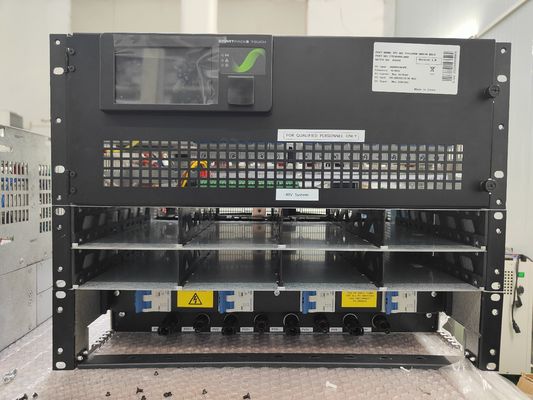
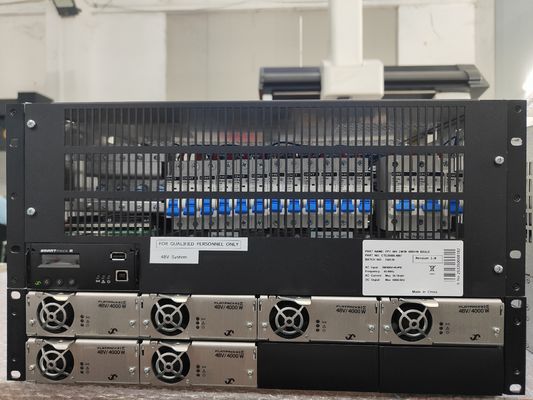
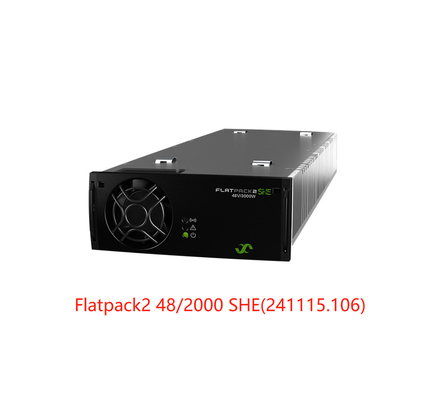
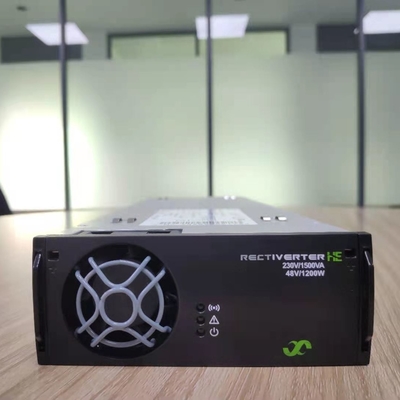
Form Factor Efficiency: Housed in a compact 2U (89 mm) height rack-mount chassis, integrating up to 4 rectifier slots (Pos 1 through Pos 4) to deliver scalable power output from 2kW to 3kW.
-
Modular Hot-Swappability: Rectifier modules support live hot-swapping. In the event of a single module anomaly, replacement can be performed without interrupting system operation, dramatically reducing Mean Time to Repair (MTTR).
2. Wide Input Tolerance and Integrated Surge Protection
-
Grid Voltage Adaptability: Supports a wide input voltage range of 85 to 300 Vac/Vdc, insulating system operation from severe mains sags and surges.
-
Multi-Stage Surge Protection: Features integrated Citel or Weidmuller Surge Protection Devices (SPD) compatible with 115V/230V single-phase and 230V/400V three-phase (TN/IT) grid configurations, markedly lowering surge-induced failures during lightning events.
3. SmartPack2 Controller and CAN Bus Synergy
-
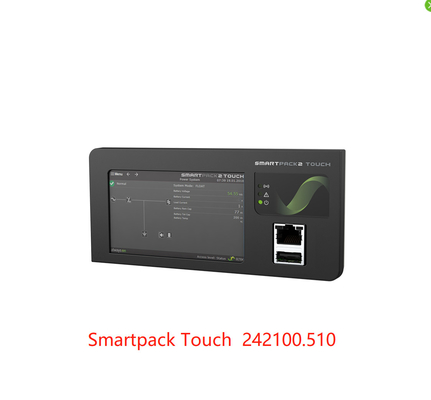
Digital Monitoring Core: Managed by the SmartPack2 digital controller (Basic, Master, or Touch) linked with the I/O Monitor Type 2 expansion board.
-
Noise-Immune Internal Bus: Internal communications utilize a robust multi-drop CAN Bus architecture (CAN1/CAN2/CAN3) equipped with dedicated end-of-line termination resistors to guarantee signal integrity in high EMI environments.
-
Remote Management and Alarming: Integrates Ethernet/Web/SNMP capabilities alongside 6 programmable dry-contact alarm relay outputs (Alarm Outputs 1-6) and multi-channel configurable inputs. Network Operations Centers (NOC) gain real-time visibility into system voltage, battery health, and alarm conditions, enabling precise, pre-diagnosed service dispatches


 Votre message doit contenir entre 20 et 3 000 caractères!